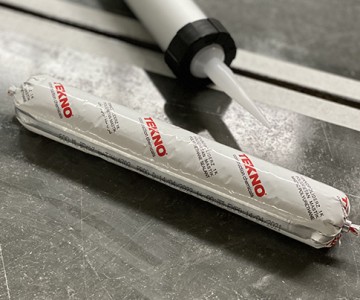
Joint sealants play an important role in construction and repair work, because if the joints are not properly or properly treated, moisture can penetrate through them into the structure, the joints can crack, etc.

What types of joint sealants are there?
 There are several main types of joint sealants that differ in their properties and areas of application. Among them are:
There are several main types of joint sealants that differ in their properties and areas of application. Among them are:- silicone;
- acrylic;
- polyurethane;
- bitumen;
- epoxy.
Each type of sealant has its own differences in the area of application and its own advantages.
What are the advantages of polyurethane joint sealants?
Polyurethane sealants are used to seal joints in interior and exterior work, including in places with high mechanical loads (for example, joints in precast concrete wall panels). Such sealants are highly elastic, have adhesion to many surfaces (concrete, brick, metal, wood, PVC, etc.) and are resistant to mechanical damage.
Polyurethane sealants are used to seal joints in interior and exterior work, including in places with high mechanical loads (for example, joints in precast concrete wall panels). Such sealants are highly elastic, have adhesion to many surfaces (concrete, brick, metal, wood, PVC, etc.) and are resistant to mechanical damage.
In addition, polyurethane sealants are resistant to temperature changes, ultraviolet radiation and aggressive environments.
Which polyurethane sealant should you choose for seams?
We recommend choosing a waterproof, highly elastic sealant for Teknopoliderz 1K seams. Suitable for filling horizontal and vertical seams with a thickness of 5 mm to 35 mm. Material consumption is 300-350 g / m2, elongation at break is up to 800%, permissible seam mobility is 25%.
We recommend choosing a waterproof, highly elastic sealant for Teknopoliderz 1K seams. Suitable for filling horizontal and vertical seams with a thickness of 5 mm to 35 mm. Material consumption is 300-350 g / m2, elongation at break is up to 800%, permissible seam mobility is 25%.
For additional information and the correct selection of material, call: +38 (067) 486 42 41