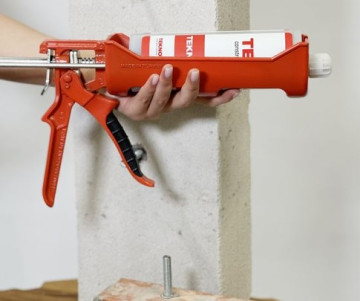
Chemical anchor or mechanical anchor is a choice that many craftsmen face when performing repair and construction work.
Mechanical anchor has been used for centuries and there are many varieties of it, but as for chemical fasteners, this is a completely new fastening material that has already earned strong popularity among craftsmen.
In this article we want to compare the use of chemical and mechanical anchors.
 What are mechanical anchors?
Mechanical fasteners can be divided into 2 types according to their principle of operation:
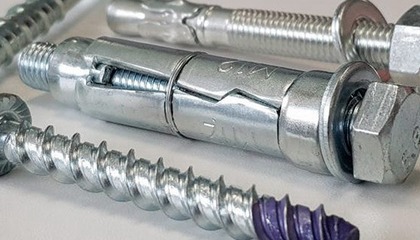 Spacers;
- Scoring.
Those, in turn, have their own subspecies. Spacer fasteners include:
- Anchor bolts;
- Anchor studs;
- Anchor sleeves.
The scoring fasteners include:
- Scoring anchors.
What are chemical anchors?
Chemical fasteners are divided by the main component component.
 They are:
- Epoxyacrylate;
- Polyester.
In terms of their functionality and strength, epoxyacrylate are considered the best, but in terms of the speed of application and solidification, polyester.
What is the main advantage of a chemical anchor over a mechanical one?
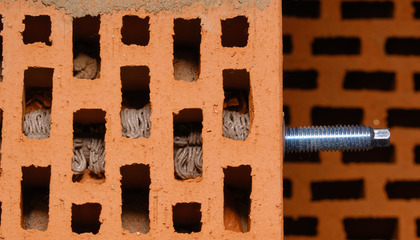
A mechanical anchor will not be able to cope with fastening into weak bases.
These include hollow blocks and bricks with voids. But a chemical anchor is ideal for working on such bases.
In addition, a chemical anchor is better suited for fixing materials on the very edge of a concrete or brick base. This material will not only provide a more reliable fastening, but also keep the base intact, preventing it from cracking in sensitive places such as corners.
Another important advantage of a chemical anchor over a mechanical one is the uniform distribution of the load not in one place, but along the entire length of the hole.
 Based on all these comparisons, it can be concluded that a chemical anchor is a more versatile and durable fastener.