The insulation of the apartment from the inside has both its advantages and disadvantages, which we will briefly describe in this article. In any construction and repair work, the main thing is to know and adhere to the correct technology of work, since by purchasing even the highest quality material, you can spoil everything with incorrectly executed works.

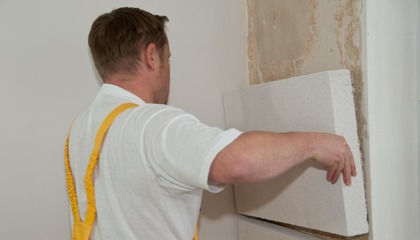 What are the advantages of warming an apartment from the inside?
Thanks to the materials for thermal insulation, the sound insulation of the room increases and, of course, the microclimate in it is regulated. The latter can be achieved only with the help of those insulating materials that are intended specifically for internal use.
What are the disadvantages of warming an apartment from the inside?
The main disadvantage of warming the apartment from the inside is the reduction of space. Since the insulation material is made about 5 cm thick, we reduce the room on each side by 5 cm. It won't really affect a large room, but if you isolate an average apartment, the difference will be noticeable.
The appearance of fungus or mold is possible during insulation in the event that unsuitable materials have been selected. For example, the insulation should not let water through, thereby collecting condensate (polystyrene foam and polyurethane foam are suitable), and the glue should be eco-friendly and vapor-permeable (suitableTeknoizofix).
 Technology of laying thermal insulation material indoors
Surface preparation stage:
- First, we check the surface for cracks, cavities and similar elements. If necessary, we seal them with a repair mixture and wait for it to dry completely.
- If there are many effects, you can apply a layer of plaster.
- After removing all the irregularities on the surface, we clean it from dust and dirt and moisten it with water.
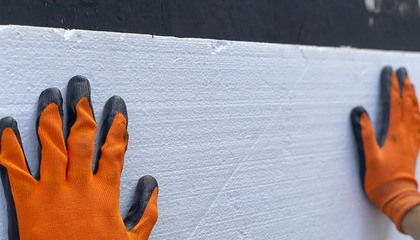 The stage of laying the material:
- We prepare the adhesive material immediately before application according to the instructions.
- We lay the thermal insulation material, wait 1-2 days and proceed to the next stages of repair work.
By the way, the application of the adhesive solution to the thermal insulation material differs depending on the characteristics of the surface. When laying the material on perfectly smooth walls, the glue is applied with a toothy spatula. And when laying on a surface with small defects or irregularities, the material should be applied with a conventional spatula along the edges of the thermal insulation plate.