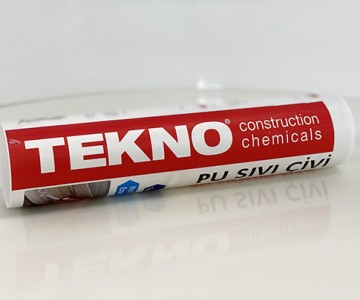
Both hot glue and liquid nails are very convenient and practical to keep on the farm. It is difficult to say which material is better or better, since it is necessary to choose the adhesive composition depending on the purpose and scope of operation. For example, if it is necessary to glue surfaces in a matter of minutes, it is better to use hot glue, since it takes literally 1-2 minutes, but liquid nails are a more versatile glue, since it can be used to fasten a wider range of varieties of materials.
There is one important disadvantage in working with thermal glue: it can leave burns when it gets on the skin, since the melting point reaches 180 °C. Therefore, you need to work with it very carefully. Of course, in terms of security, liquid nails occupy a more advantageous position.
 What are liquid nails and how to use them?
Liquid nails are a type of fast-acting adhesive composition, most often based on polyurethane. We offer to look at the features and applications of the material on the example of liquid nails of Turkish production Tekno PU.
The main feature of liquid nails is the ability to glue various types of building materials that have both porous and non-porous surfaces. These include:

-
concrete - tree
- metal
- marble
- ceramics
- expanded polystyrene, etc.
When applying liquid nails to non-porous surfaces, it is recommended to moisten them slightly. The temperature range for working with the material varies from 5 °C to 30 °C, and for storage – from - 10 °C to 35 °C.
The manufacturer does not recommend using liquid nails for gluing nylon, polyethylene and polypropylene materials, as well as ABS and PTFE.
How to choose liquid nails?
When choosing liquid nails, pay attention to such technical characteristics as material density (ideally from 1.1 g/ml to 1.2 g/ml), setting time (15 minutes is considered sufficient time for setting a high-quality adhesive composition), as well as color, since, for example, Tekno PU liquid nails are colorless, but after drying they become white.
Which is better: hot glue or liquid nails?
A clear answer to the question “Which is better: hot glue or liquid nails?” it is impossible to give, since the material must be chosen depending on the requirements during operation. When working with both the first and the second adhesive composition, there are both pros and cons.

 Advantages when working with thermal glue:
- The ability to glue surfaces in a matter of minutes
Disadvantages when working with hot glue:
- Inability to correct glued surfaces
- The probability of getting a burn if the glue is handled carelessly.
 Advantages of working with liquid nails:
- Glues together a wider range of varieties of building materials
- It is possible to adjust the junction of the surfaces
Disadvantages of working with liquid nails:
- The total drying time is up to 24 hours.
Summing up, we can say that it is more comfortable and safer to work with liquid nails, but if it is necessary to instantly glue surfaces, hot glue will do better. And you can choose!