Engaged in landscaping, there is a problem of choosing the material for sidewalks. The construction materials market presents a huge number of different options. And often the choice is between paving slabs and printed concrete.
Both materials have their advantages and disadvantages. And in order to make the right choice, you should carefully study them.
 Differences between paving slabs and printed concrete
If we compare paving slabs and printed concrete, then we can distinguish the main differences:
- Appearance. According to this criterion, printed concrete has advantages.
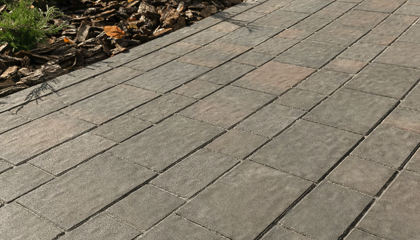 Modern technologies allow you to stamp concrete with any textures and various shapes. The tile is made of a certain shape and it is impossible to make changes.
 - Composition. Paving stones are often made of not very high-quality concrete. And this can lead to a short service life. But as for printed concrete, you can choose a quality material yourself.
- The technology of laying. For laying both tiles and printed concrete, the surface must be properly prepared. However, it is still easier to lay printed concrete.
Which is better to choose paving slabs or printed concrete?
It is difficult to say unequivocally which is better: paving slabs or printed concrete. In addition to the advantages, it is also worth considering your personal wishes. However, regardless of where you stop, the final result will depend not only on the material itself, but also on the correctness of its laying.
If the choice was made on printed concrete, it is important to use high-quality related materials. So, an excellent option would be to use a hardener for freshly printed concrete Teknoser Baski. In its composition, it has quartz fillers and other components that increase the wear resistance of the surface.
Features and Application of Teknoser Baski
The hardener is used for both internal and external concrete surfaces: sidewalks, shopping malls, ramps, underpasses, etc. Such a wide scope of application is due to a number of properties of the hardener:
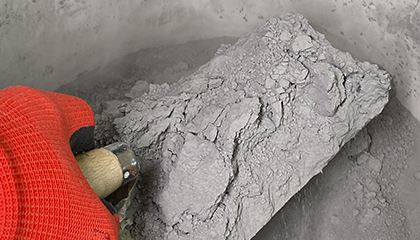 minimizes the formation of dust on the surface
- increases the resistance of the surface to wear and other mechanical damage
- gives a more aesthetic appearance
- increases the strength of the coating
- increases resistance to temperature changes.
It is important to use not only high-quality materials for working with printed concrete, but also to comply with all requirements and recommendations. This will create an attractive appearance coating and achieve a long service life.
