Self-leveling floor has a wide range of applications. It is used in various types of premises from residential to industrial due to its unique properties, such as high wear resistance, seamlessness, ease of maintenance and aesthetic appearance.
Types of self-leveling floor materials and their advantages
 Self-leveling floors can be made of different materials, each of which has its own unique properties and applications. Among them:
Epoxy.
It is characterized by high strength and wear resistance, resistance to chemicals. Formation of a smooth seamless surface, including the possibility of creating a variety of decorative effects.
Polyurethane.
It is characterized by high elasticity, resistance to mechanical stress and temperature fluctuations, as well as resistance to ultraviolet radiation.
Polyurethane-cement.
It is characterized by high resistance to chemical influences, temperature fluctuations and mechanical stress.
Acrylic.
It stands out for its drying speed, the ability to be applied at low temperatures, and high resistance to mechanical stress.
What is the best epoxy self-leveling floor?
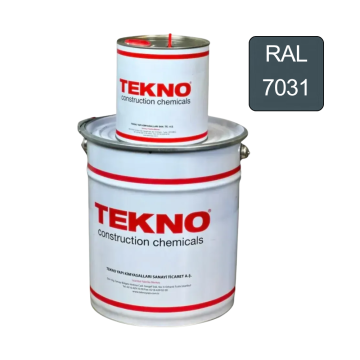
The best epoxy self-leveling floor today is Teknobond 500. In addition to all the above advantages, it has a wide color palette, and you can also create a matte or semi-matte coating with it. The material is pleasant to work with, because it lays well on the surface in an even layer and has no unpleasant odor. Consumption 0.4-1.5 kg / m2.
For additional information and the correct selection of material, call: +38 (067) 486 42 41