The use of self-leveling floors is rapidly gaining popularity as a type of decorative coating. Today we will tell you what kind of coating it is, what kinds of self-leveling floors exist and what are the features of the epoxy coating.
 What is a self-leveling floor?
 Self–leveling floor is a type of durable flooring that is used to create a flat floor on various objects: apartments, houses, office premises, educational buildings, hospitals and clinics. Also, some types of self-leveling floors are suitable for rooms with high intensity, for example, warehouses, parking lots and others.
Among the varieties of self-leveling floors, polyurethane, epoxy and methyl methacrylate are distinguished.
What is an epoxy self-leveling floor?
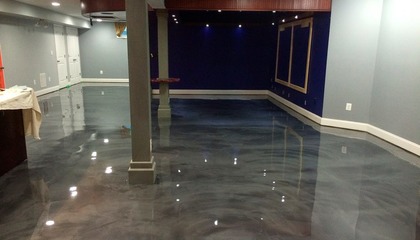 Epoxy self–leveling floor is a coating that is created from materials based on epoxy resins and special additives, thanks to which the floor covering will be durable and wear-resistant. Unlike polyurethane self-leveling floor, epoxy is water resistant, as well as highly resistant to chemicals.
What materials are used to create an epoxy self-leveling floor?
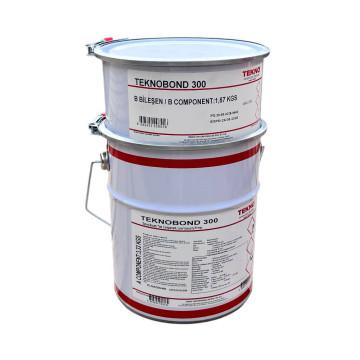
To create an epoxy self-leveling floor, it is necessary to use 2 materials, which we will analyze using the example of the Tekno manufacturer's products.

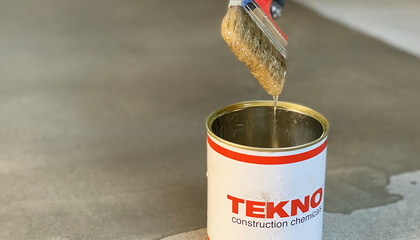 Teknobond 300 is an epoxy primer designed specifically to create a primer layer before pouring a self–leveling floor based on epoxy or polyurethane resin. The material penetrates into the pores of the concrete base, providing a high level of adhesion between the concrete and the self-leveling floor. The primer consists of two components. The consumption is 300-500 g/m2 when applying a material with a thickness of 1 mm.
Teknobond 500 is a liquid working material for creating a self–leveling floor based on epoxy resin, thanks to which it is possible to create a beautiful perfectly smooth high-strength coating resistant to various chemicals. substances. The material has a wide color palette, and it can also be used to create both a glossy and a matte surface.
Both materials consist of two components that should be mixed immediately before applying to the surface. After applying the primer, the following material can be applied in 24-48 hours.