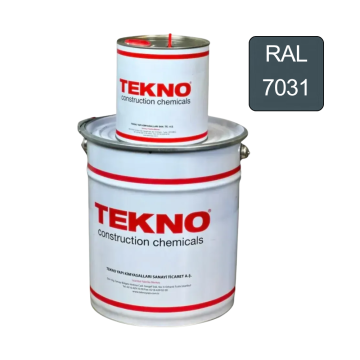
The self-leveling floor will be used in a variety of areas: residential and commercial premises, educational institutions, hospitals and polyclinics, covered parking lots and industrial premises. As for the self-leveling floor in apartments, it is also an excellent choice, the advantages of which we will tell you in our article.
 What types of self-leveling floor are used in the apartment?
Among the types of self-leveling floors that are suitable for use in apartments and other residential premises, there are:

- Polyurethane;
- Epoxy.
Both types belong to synthetic self-leveling floors, which, with high-quality filling, will last at least 15 years, and when choosing high-quality materials, the shortest service life of the coating becomes 40 years.
What is the difference between polyurethane and epoxy self-leveling floor?
Epoxy and polyurethane self-leveling floors are very similar in their technical characteristics.
Both types are durable and wear-resistant coatings that are not afraid of exposure to moisture and changes in air temperature. But the self-leveling floor based on epoxy resin is also resistant to various chemical caustic substances, as well as more resistant to the formation of mechanical damage.
 Advantages of self-leveling floor in the apartment
Among the advantages of using a self-leveling floor in an apartment are:
 Wear resistance and durability: polyurethane or epoxy self-leveling floor will serve for many decades, without fear of moving furniture around the apartment, thin heels, broken vases, coloring substances, etc.;
- Speed of work: it takes much less time to fill a self-leveling floor in comparison with laying tiles, laminate and many other floor coverings;
- Absence of interior thresholds;
- The diversity of the coating: the creation of all kinds of patterns in any colors according to the RAL palette in mat or gloss is a serious advantage of a self–leveling floor based on epoxy resins or polyurethane over other finishing materials.
Cons of self-leveling floor in the apartment
The main disadvantage of using a self-leveling floor in an apartment is the difficulty of dismantling it, since this material has very good adhesion to the base.
Also, the disadvantage is the desirable additional expenses for installing a underfloor heating system, since the self-leveling floor itself will be a very cold surface, even in a very warm apartment. Although if the underfloor heating was already in the plans, then this minus automatically becomes invalid.