An excellent option for decorating the floor in an industrial building is to use an epoxy self-leveling floor. After all, it has many advantages, including:
wear resistance;
durability;
good aesthetic appearance;
the ability to create an interesting design.
In this article, we will talk about the nuances of working with an epoxy self-leveling floor.
What materials are needed to create an epoxy floor?
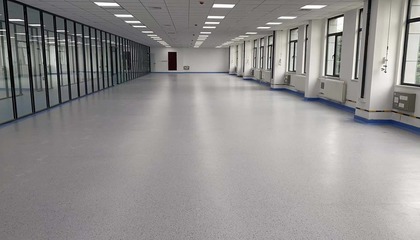 To create a high-quality, durable self-leveling epoxy floor, 2 materials are needed:
epoxy primer;
epoxy material for creating an epoxy floor.
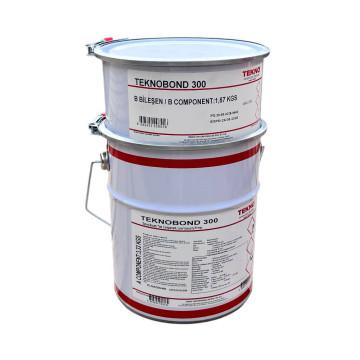
The first is Teknobond 300 - a two-component primer used for priming the surface in order to ensure high adhesion between the surface and the epoxy material. It can be used on all types of mineral surfaces before pouring epoxy and polyurethane coatings.
Of course, the surface must first be cleaned and degreased.
The material has low viscosity and penetrates deeply into the concrete base.
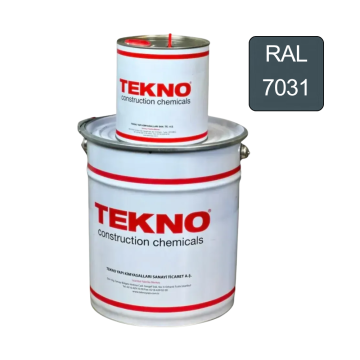
The second is Teknobond 500, a two-component material. It forms a smooth, moisture- and chemical-resistant self-leveling epoxy floor, both glossy and matte or semi-matte. The prepared working solution should be distributed over the surface for 30 minutes, using a special needle roller to avoid the formation of bubbles.
It is recommended that moisture does not get on the surface for the first 24 hours after pouring.
For additional information and the correct selection of material, call: +38 (067) 486 42 41