The number of reinforced concrete bridges that are operated in every corner of the world is simply huge. The reason for this is the fact that so far this type of bridge is considered the most reliable, durable and wear-resistant. Of course, every bridge needs to be checked, repaired and strengthened from time to time, since constant exposure to moisture, climate change and other factors affect the quality of reinforced concrete structures.  If all splinters, cracks and other defects are eliminated in time, a reinforced concrete bridge can last for more than one century.
 What are the reasons for the destruction of reinforced concrete bridges?
A reinforced concrete bridge, like any other reinforced concrete structure, is susceptible to the following factors:
- Changes in climatic conditions;
- Natural phenomena such as earthquakes, fires, hurricanes and other emergencies;
- Force influences.
In addition to the above, part of the reinforced concrete bridge is fed to the constant influence of moisture. And also the structure lends itself to constant operation of a sufficiently high intensity.
What defects as a result of destruction can appear on a reinforced concrete bridge?
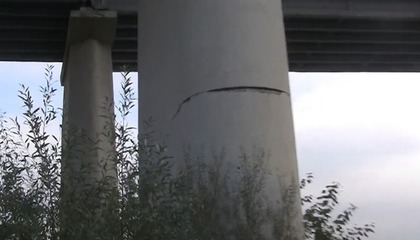 Among the defects resulting from the destruction of reinforced concrete bridges for the reasons mentioned above, there are:
- Corrosion of fittings;
- Concrete corrosion;
- Cracks (inclined and normal), as well as a grid of small cracks;
- Bulging of rebar or baring of rebar;
- Breakaways;
- Peeling of a layer of concrete with a protective material;
- Partial color change of the concrete surface.
Due to the appearance of such defects, the reinforced concrete bridge becomes less wear-resistant and reliable. Therefore, it is important to eliminate any defects in the early stages in a timely and correct manner, without bringing the object to an emergency state.
How to repair defects on a reinforced concrete bridge?
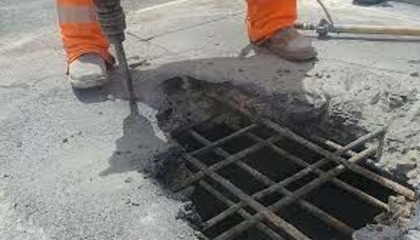 For high-quality repair of a railway bridge, it is necessary to choose the right repair compound that has high adhesion, is resistant to freezing and thawing cycles, is resistant to corrosion and has high strength characteristics.
The cement-based repair mix Teknogrout 350 is ideal for repairing a reinforced concrete bridge.
The strength of the material is more than 60.0 N/mm2 in accordance with TS EN 1996 standards.
If there are a lot of cracks on a reinforced concrete bridge, then they can be repaired with a sealant, for example, polyurethane.
