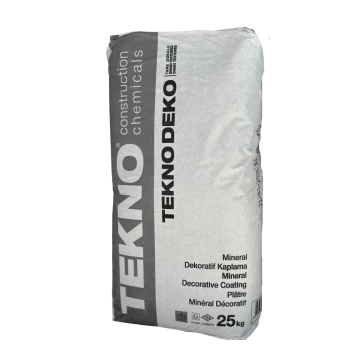
Due to its advantages, plaster is one of the most popular finishing materials today. It is easy to apply and care for, eco-friendly and vapor-permeable, wear-resistant and moisture-resistant. In addition, you can create the most diverse pattern on the plastered surface and paint it in any desired color.
.jpg) In our article we have prepared a small review of high-quality plasters.
In our article we have prepared a small review of high-quality plasters.
 What types of facade plasters are there?Plasters are classified according to the main component and the place of application.
Plasters that are used as decorative and repair materials are different types of plasters.
Gypsum and cement types of plasters are allocated for repair. The latter are considered more reliable material.
For surface decoration, cement-based plasters with chemical additives, as well as acrylic and silicone-based plasters are isolated.
 Teknoizosiva cement plaster
Teknoizosiva plaster evens the surface and increases its strength. It can be used on all three planes: floor, walls, ceiling, both externally and externally.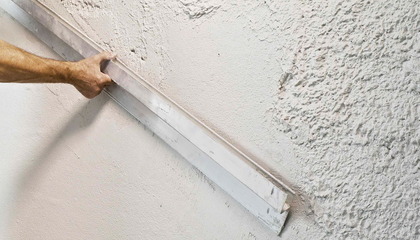
The material is elastic, non-flammable and breathable. Withstands any climatic conditions and is confirmed by hydrothermal tests of the surface. Plaster is not prone to cracking, as it absorbs vibrations that may occur due to temperature changes.
There is nothing complicated in applying the material: it is applied with a serrated steel spatula measuring 10 mm by 10 mm in 2 layers.
Decorative plaster
Teknodeko Decorative plaster bark beetle Teknodeko is made on the basis of cement with polymer additives that provide wear resistance and strength of the material during outdoor use.
The plaster is white, but after drying it can be painted in any color with a special paint intended for outdoor use.
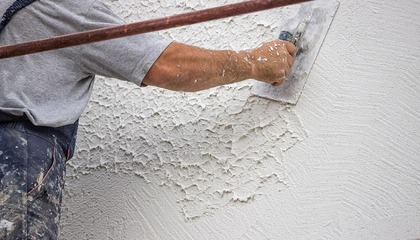 Teknodeko decorative plaster is considered a high-quality material, as it can withstand a variety of climatic conditions, and it is also not sensitive to temperature changes, even very sharp.
The material performs not only the function of a decorative facing material, but it can also be used to correct minor defects on the surface. The material with a thickness of 1.2 mm is applied.
Of the advantages of this plaster, vapor permeability and moisture resistance are also distinguished. These two criteria are very important when choosing a cladding material outside the premises, since the surface should not become damp and accumulate condensate.