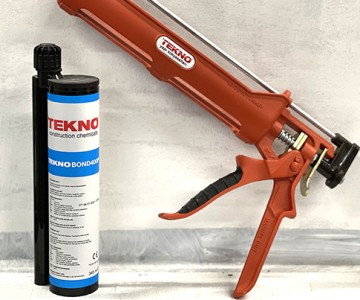
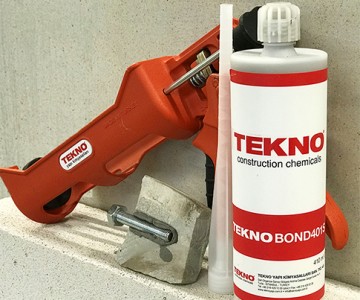
Depending on the composition of the chemical anchor and the base in which it is necessary to fix the fastener, it can withstand different weights. But in comparison with fixing fasteners on a conventional mechanical anchor, this material withstands weight many times more. Let's look at this issue in more detail.
 What is a chemical anchor?
Chemical anchor is one of the most popular materials for fixing fasteners, such as bolts, pins, injection packers, etc. This is a two-component fast-hardening thixotropic composition, presented in two versions: based on polyester and based on synthetic epoxyacrylate resin. The material is used both in repairs and in construction, which in the future will be operated by a large number of people or will be subject to high-intensity loads.
What are the main advantages of a chemical anchor?
Despite the fact that the chemical anchor began to be used quite recently, it is very popular among craftsmen due to its convenience and ease of use.
The main advantages of the chemical anchor include:
- Fast setting time – an average of 10 minutes
- Pasty
- Ensuring complete tightness of the hole
- High strength (tear strength – ≤ 0.6 mm (at 75 kN load)
- Durability – more than 50 years
- High resistance to chemicals
- Preventing the development of reinforcement corrosion
- Wide scope of application.
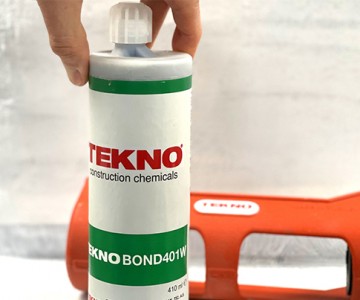
There are also special moisture-resistant chemical anchors designed for use on wet surfaces. For example, Teknobond 401 W is used in the construction of bridges, various water structures, and is also used in port construction.
The material hardens after 8 minutes, and, if necessary, after 1 hour, the chemical anchor can be applied again. Teknobond 401 W complies with the TS EN 1504-6 standard.
How is the chemical anchor better than the usual one?
Chemical anchor is a thixotropic composition that does not slip off surfaces of any type and hardens in an average of 10 minutes, making it very convenient to work with the material. The composition is used to fix fasteners in both solid and hollow material (bricks or blocks), which an ordinary anchor would not cope with. The chemical anchor is more reliable, it withstands loads several times more than the mechanical anchor. Also, the chemical anchor prevents the process of corrosion of the reinforcement.
Conclusion: in the XXI century, it is time to use reliable modern technologies for fixing fasteners, namely chemical anchors, which, if used correctly, will last more than 50 years. And get acquainted with the recommendations for the use of chemical. you can find anchors in the article "Chemical anchor for concrete: how to use it correctly".