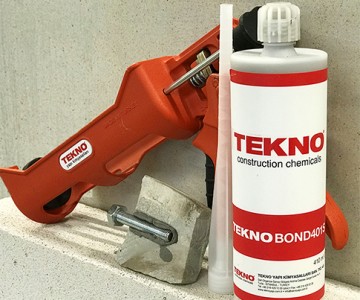
Chemical anchor is a fairly new invention in the field of construction chemistry. Some masters are already actively using this material in their work, and some are still thinking whether it is worth experimenting.
Our answer: definitely worth it!
In this article, we offer you to familiarize yourself with the recommendations for working with chemical anchors.
 How to use a chemical anchor correctly?
To fix fasteners with a chemical anchor, you will need the following:
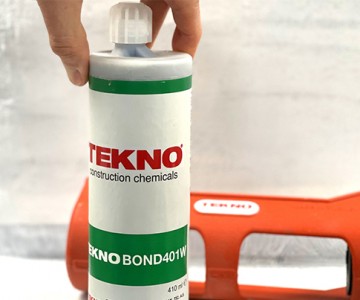
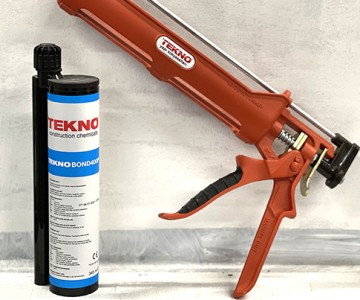
- cartridge with chemical anchor
- a special cartridge gun (in fact, you can do without it if you need to attach only a few fasteners, but for larger-scale work, it is recommended to stock up on this tool for more convenient and faster work).
- a drill for drilling holes
- anchor element
- round wire brush
- special extension cord (for working with deep holes)
- static mixer
- anchor dowels (for working with hollow materials)
- protective gloves, mask and glasses.
How and which hole to drill for a chemical anchor?
The size of the hole should be drilled using a hammer drill in accordance with the diameter and length of the anchor element used. After that, you need to clean the hole first with a special round wire brush, then with compressed air. Repeat if necessary. There should be no dust and dirt left in the hole, as they can reduce adhesion to the substrate.
How to fix a chemical anchor in concrete?
- Chemical fastening technology. anchors in concrete, brick, and other hollow material are identical. You need to follow simple rules:
- Drill and clean the hole.
- Secure the cartridge in the gun.
- Hold the trigger and wait until the composition starts to come out of the tip of the static mixer.
Attention: the chemical anchor is a two–component composition, so do not use the first 10 cm of the material, since both components should mix perfectly in the tip. - Start slowly pulling out the cartridge, filling the hole. It is very important not to leave air gaps.
- Use an extension cord if you are working with sufficiently deep holes.
- After filling the hole with chemical. using the anchor, scroll through the anchor element.
- Wait until the chemical anchor is completely dry and you can safely load the fasteners.
Which chemical anchor is recommended to use for hollow bricks?
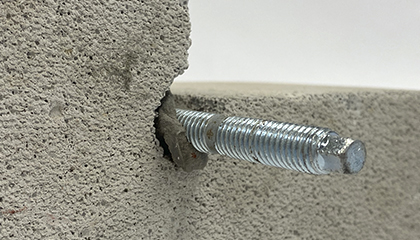 For hollow bricks, it is recommended to use a chemical anchor based on synthetic epoxyacrylate resin, for example, Teknobond 401S.
The pressure strength of the material is 60-70 MPa.
Adhesion – more than 4 N/mm2.
Breaking strength – 57 kN.
Complies with TS EN 1504-6 standard.