Toppings are applied to a freshly laid concrete floor to increase the wear resistance, strength and durability of the surface. Depending on the type of topping, it can be applied in several ways, which we will discuss in this article.
 The "dry-on-wet" method
The essence of the method is that dry topping is scattered on freshly laid concrete, which absorbs the necessary amount of milk from the surface independently, thus ensuring maximum adhesion of the topping to the concrete surface.
After the topping has absorbed enough moisture, it will darken. You should immediately start grout with a special grout machine or, as it is also called, "helicopter". If you have a large area, then most likely, as soon as you complete the distribution of the material on the surface, it will already be necessary to start grout.

Depending on the intensity of the loads during further operation of the concrete floor, topping can be applied in both 1 and 2 layers.
The average consumption of topping, for example, Teknoser 100, ranges from 2 to 4 kg /m2 with one layer of application.
If the work is done correctly, you will get a surface 1.5-2 times stronger and more durable from bare concrete.
Wet-on-wet method
The most important advantage of this method is that the hardening material is applied in the form of a liquid consistency and, as a result, it does not "take away" moisture from concrete. And we all know that the faster the concrete loses moisture when pouring, the more likely it will crack and collapse in time. This method provides the highest possible adhesion of the reinforcing material to concrete, and also makes the surface very wear-resistant, durable and dust-free.
This method is easier and more convenient to work with, because applying a liquid hardener is difficult to do something wrong, but at the same time it is more expensive.
Therefore, in Ukraine, it is the "dry-on-wet" method that is considered the most popular and universal.
The "volumetric topping" method
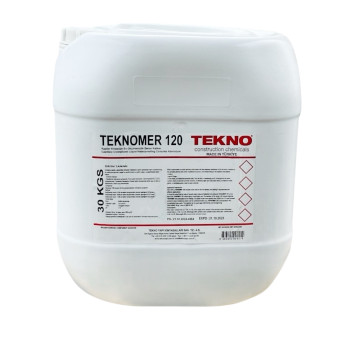
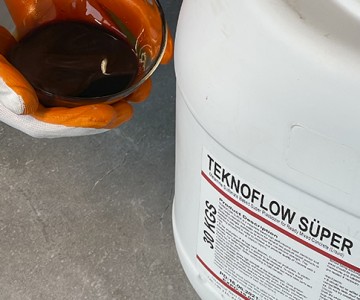
Everything is simple here: special modifiers are added to the concrete mixture before pouring, which increase the performance characteristics of concrete. Thus, the concrete is strengthened not just from above, but along the entire thickness of the layer. There are hundreds of types of concrete additives that are used depending on the required task, for example, additives to prevent moisture loss from concrete, to make concrete resistant to moisture (Teknomer 120), to increase the plasticity of concrete (Teknoflow Super plasticizer), to increase the strength of concrete, and so on.
In any case, regardless of the chosen method of concrete hardening, choose only high-quality and certified materials.