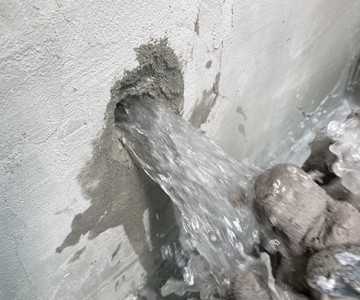
Cracks can appear in concrete for a variety of reasons. Some of the main reasons include:
 Compressive and Tensile: Generally, concrete resists compression well, but is less resistant to tension. Applying strong tensile forces or exceeding limit values can cause cracks.
Shrinkage: As concrete cures, shrinkage occurs as water evaporates and the material contracts. Shrinkage cracks may appear due to non-uniform shrinkage or restrictions on the free movement of concrete.
Thermal stresses: Under significant temperature changes, concrete can contract or expand. If these stresses exceed the tensile strength of the material, cracks can occur.
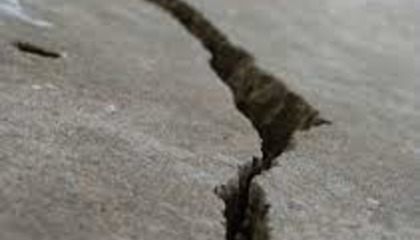 Chemical reactions: Some chemical processes, such as the alkali-silicon reaction or the corrosion of rebar, can cause concrete to expand and break.
Incorrect Design or Execution: Errors in the design or execution of concrete structures, such as incorrect mixing ratios, poor craftsmanship during placement, or poor concrete compaction, can lead to weak spots and cracks.
Impact of external loads: Concrete structures can be subjected to various loads such as dynamic loads, seismic forces, traffic loads or uneven load distribution. This may cause cracks to appear.
To prevent or reduce the occurrence of cracks, it is important to properly design and build concrete structures, follow recommendations and standards, control the quality of materials and workmanship, and take into account possible external factors that may affect concrete.
 What to do when cracks in concrete have already appeared?
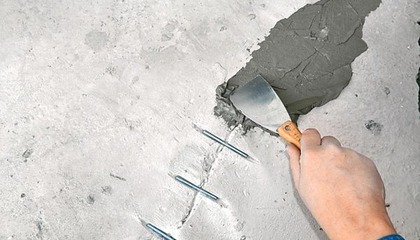 If, for one reason or another, cracks nevertheless formed on the concrete surface, then they should be eliminated as soon as possible. The material must be selected based on the type of cracks, their causes, size and location. The most popular materials today are special cement-based non-shrinking repair mortars, as well as self-leveling mortars.
For example, Teknogrout 350 is an excellent solution for filling cracks from 10 to 75 mm. It is a high-strength repair mortar for outdoor and indoor use with an adhesion index of more than 2 N/mm2.