The repair compound Teknorep 300 EX(Текнореп 300 ЕХ)

Products > Repair compound for concrete

The repair compound Teknorep 300 EX(Текнореп 300 ЕХ)

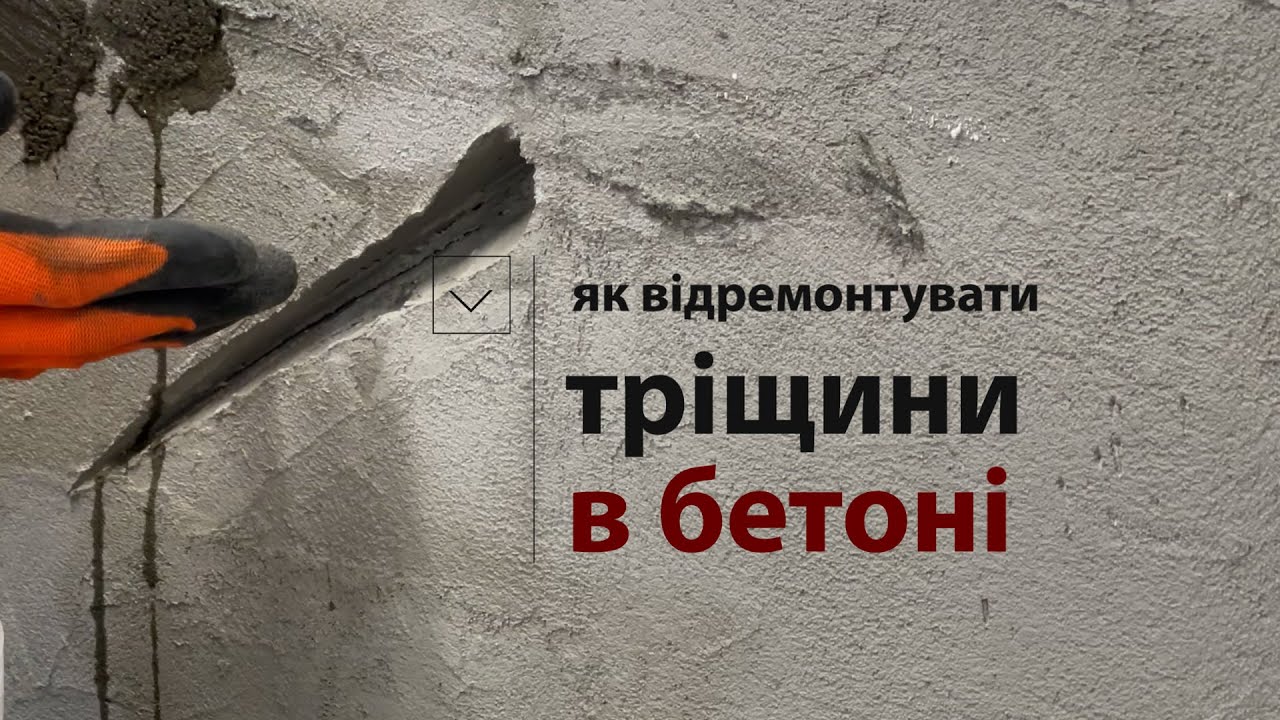
One-component non-shrinking high-strength elastic mixture for vertical repair of cement-based concrete.

990
uah
x
bag
=
990 uah
CHECKOUT

Введите свои данные

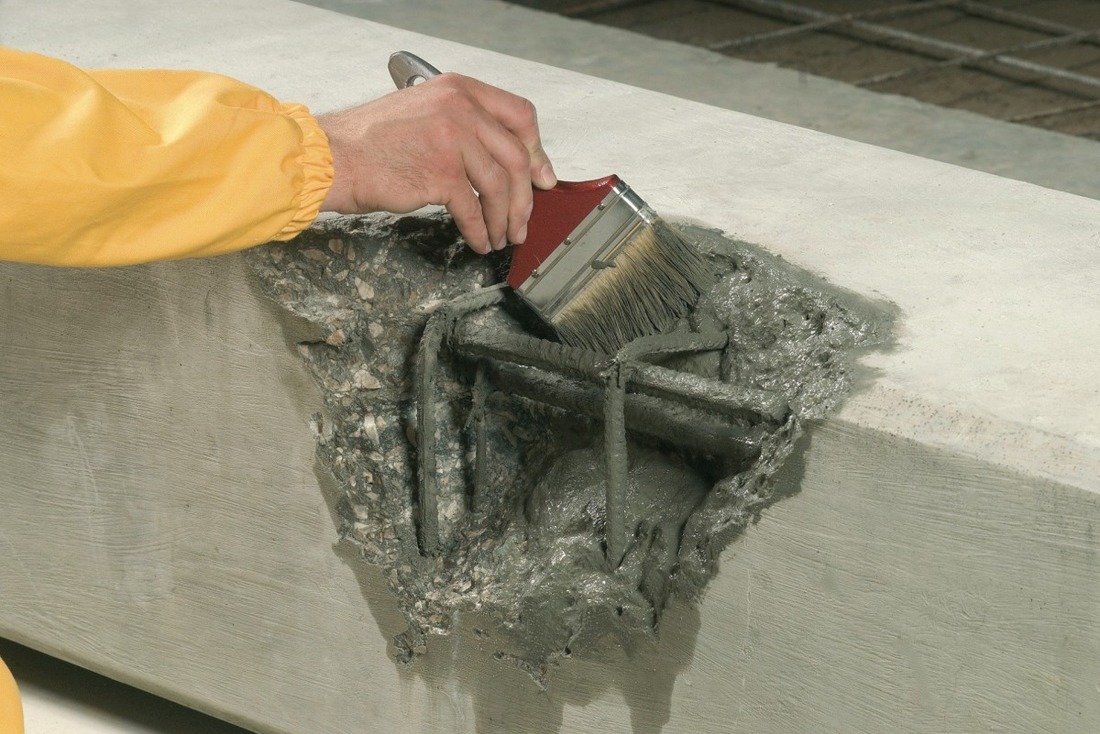
Teknorep 300 EX is an one component non-shrinkable high-strength elastic repair compound based on cement, reinforced with polymer fibers.

Scope of application:

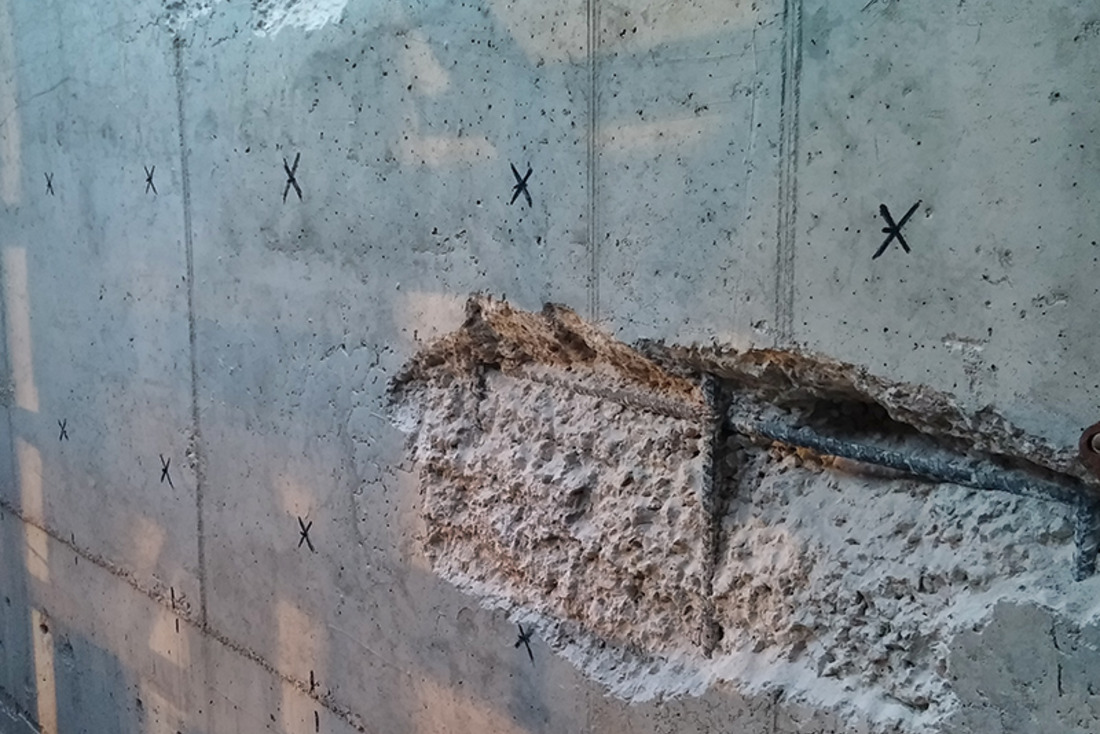
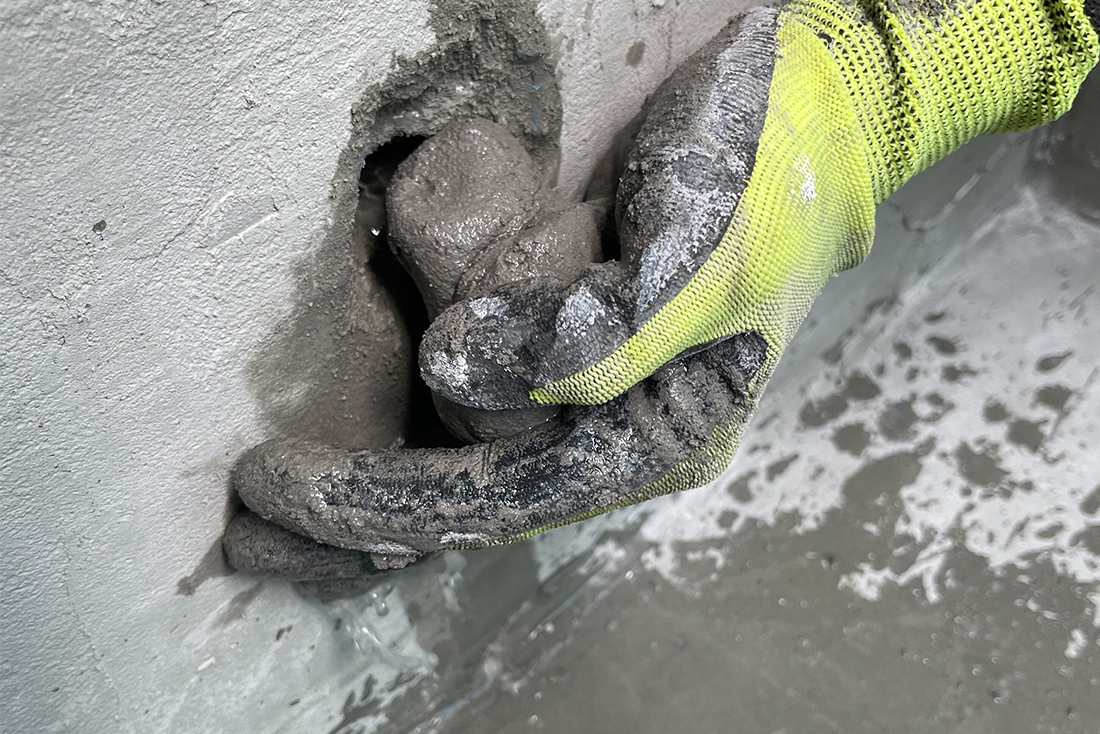
  • For filling holes after dismantling of fittings and tie screws in reinforced concrete structures
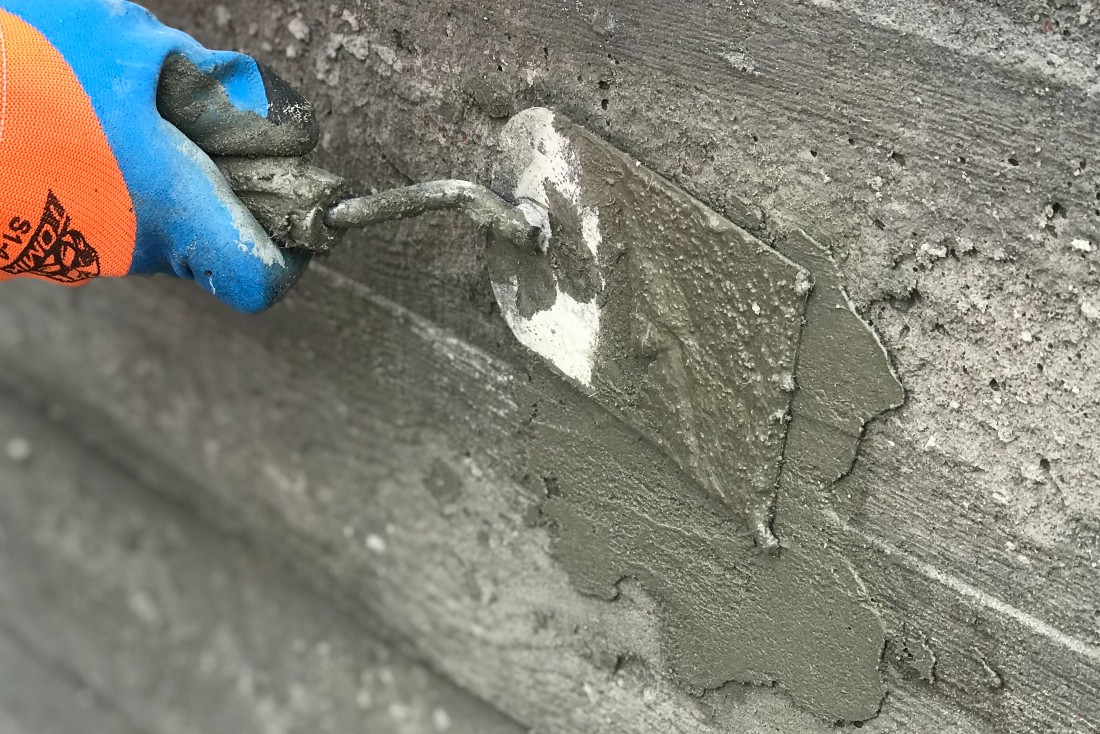
  • For the repair of concrete surfaces after removing the formwork
  • For the repair of concrete products and structures in all types of engineering structures, such as metro, highway, platinum
  • For the repair of prefabricated elements made of reinforced concrete
  • To eliminate defects on a surface with a thickness of 10 to 40 mm

Properties of concrete repair material:

  • Waterproof
  • It has high adhesion rates
  • It is resistant to sulfate and chlorine
  • Does not cause corrosion
  • It is resistant to freezing and thawing
  • Suitable for use on vertical and horizontal surfaces
  • Does not shrink
  • It is resistant to concrete carbonation
  • It has a high compressive strength
  • Does not contain chlorides
  • Easy to use
Colour Grey
Expiration date 12 months in a dry environment in a closed package. 
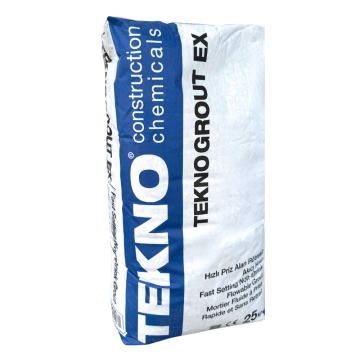
Packaging 25 kg bag
Application temperature + 5 °C - + 35 °C
Mixing ratio 3.5-4.5 liters of water / 25 kg of powder
Viability ≥ 20 minutes
Commissioning 24 hours
Application thickness 10-40 mm (in one layer)
Flexural strength (EN 12808-3) > 10.0 N/mm2
Adhesive strength with concrete (EN 1542) > 2.0 N/mm2
Compressive strength (EN 12808-3) > 50 N/mm2
Modulus of elasticity (EN 13412) > 20 Gpa
Shrinkage (EN 12617-4) > 2.0 N/mm2
Capillary water absorption (EN 13057) < 0.5 kg/m2*h
Chlorine capacity < 0,05%
Fire resistance A1

Consumption table: 

Teknorep 300 EX Density of the compound (kg/l) Consumption of powder per 1 mm/1 m2 (kg)  Volume of water for mixing (l)
25 kg craft bag 2,06 1,8 3,5-4,5
  • Before applying the material, the surface should be cleaned of any types of oil, rust, detergents, dirt and other substances that prevent setting.
  • Before using Teknorep 300 EX, the surface should be moistened.
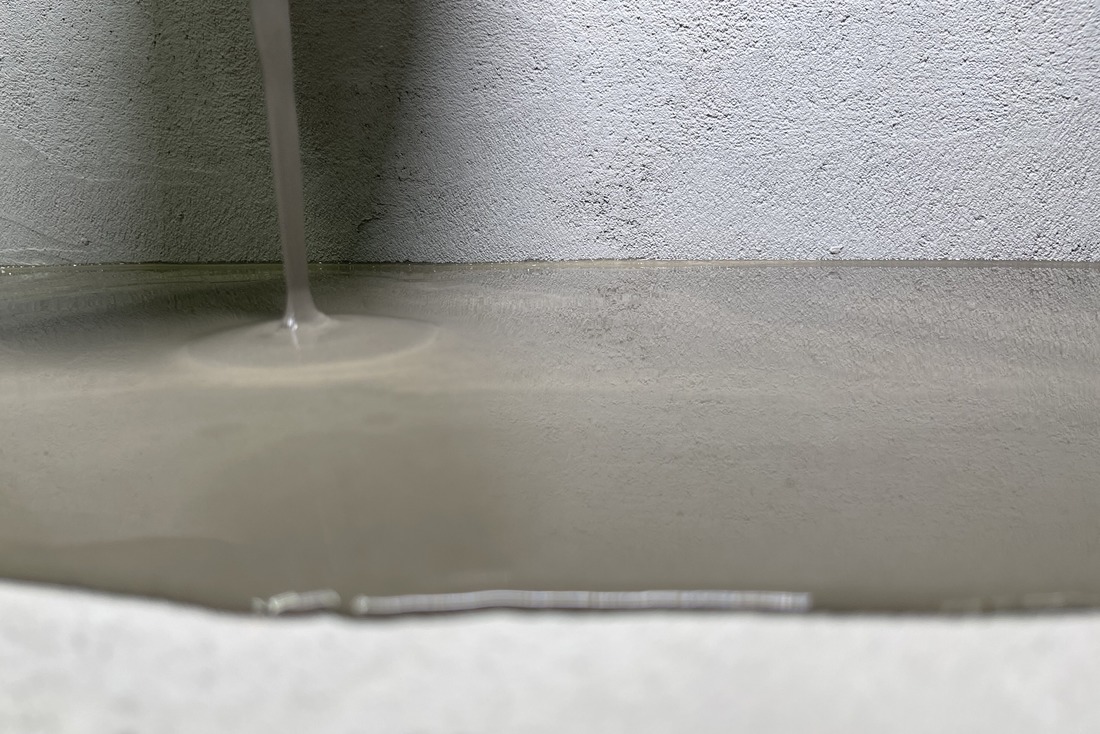
  • To prepare the working solution, pour 3.5 - 4.5 liters of clean water into a clean container.  Pour the Teknorep 300 EX powder (25 kg) into a container with water and use a low-speed mixer to knead the composition for at least 5 minutes until a homogeneous mass is obtained. Leave the resulting compound for 3 minutes, then re-mix the compound for 2 minutes. Do not add water to the already prepared compound.
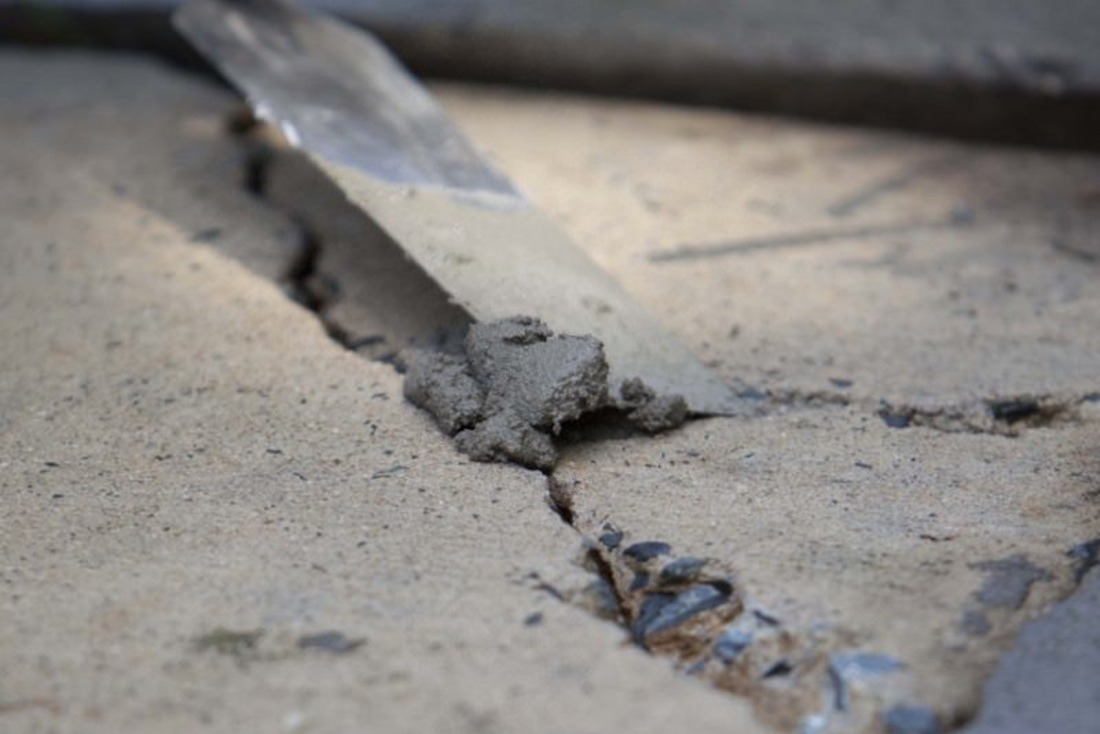
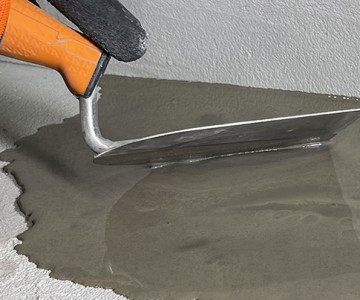
  • The compound should be applied to the surface with a spatula. If necessary, apply a layer with a thickness of more than 40 mm, you should perform the work in several layers.
  • When working on old concrete surfaces, you should first use the Tekno AD primer.
  • When using Teknorep 300 EX in high wind conditions or other harsh environmental conditions, it is recommended to use Teknokur 100 as a curing material to prevent cracking of the surface.

Notes:

  • For outdoor use,  it is necessary to protect the surface from moisture, sunlight and frost during the first 3 hours of solidification of the compound.
  • When used at a low temperature, the lifetime of the compound increases, at an elevated temperature it decreases.
  • When used in conditions of low temperature, it is necessary to use warm water, at high temperature – cold water.
  • It is not recommended to use in contact with liquids whose pH value is lower than 5.5.
  • Work should be carried out in compliance with safety and hygiene standards, using a mask and glasses.
  • The tools and equipment used must be washed immediately after use.

1. What are the features of R4-class repair mortar for structural repairs?
R4-class repair mortars under EN1504 standard have high compressive strength (over 45 MPa), excellent adhesion to concrete and metal, and resistance to temperature variations. This makes them suitable for structural repairs. Teknorep 300 EX has strong adhesion to concrete and metal (2 MPa), compressive strength of 50 N/mm², and a modulus of elasticity of 20 GPa. It meets the R4 class requirements of EN1504 and can be used for structural repairs.

2. How can columns and slabs with deep damage be repaired?
For deep damage in concrete and precast reinforced concrete structures, R4-class repair mortars should be used. These fiber-reinforced mortars are designed to restore load-bearing structures, including columns, slabs, and beams with significant damage. For example, Teknorep 300 EX meets all structural repair standards and is ideal for such deep repairs. It can be applied in a layer from 10 mm to 40 mm thick.

3. What is the maximum layer thickness for structural repair mortar when fixing deep concrete damage?
R4-class mortars can vary in their specifications, so it’s important to follow the manufacturer’s instructions. Teknorep 300 EX is applied in layers from 10 mm to 40 mm. Once fully cured, a second layer or a thin-layer finishing mortar like Teknorep 200 can be used for final leveling.

4. Which repair mortar should be chosen for external use in harsh climatic conditions?
For concrete and reinforced concrete repairs exposed to severe weather — temperature fluctuations, heavy and constant loads, sulfate and chloride attack — repair mortars that meet the R4-class EN1504 standard are required. For quick deep repair, consider the fiber-reinforced mortar Teknorep 300 EX. This shrinkage-compensated cement-based mortar is ideal for external repairs of any type of reinforced concrete structure, ensuring high durability and strength of the restored surfaces.

5. At what temperature can damaged concrete be repaired outside, and which materials can be used at low temperatures?
Before starting repairs, it’s important to consider the freeze-thaw resistance and temperature tolerance of the mortar. Waterproof, frost-resistant mortars that meet R4-class standards are recommended. Teknorep 300 EX is a thixotropic mortar suitable for temperatures as low as +5°C.

6. Can structural repair mortars be applied on both vertical and horizontal surfaces?
For repairing horizontal and vertical concrete surfaces, plastic and thixotropic mortars that don’t sag or shrink should be chosen. Teknorep 300 EX meets these criteria, making it easy to restore both horizontal and vertical areas.

7. Is additional reinforcement needed before applying the repair mortar?
Typically, extra reinforcement (like steel mesh) is only required for large areas or heavily loaded zones. However, Teknorep 300 EX is already reinforced with polymer fibers and doesn’t need additional preparation.

8. How should concrete surfaces be prepared before applying an R4-class repair mortar?
The surface should be cleaned of dust, dirt, and weak concrete particles. For better adhesion, it’s advisable to treat it with a corrosion inhibitor and a bonding primer like Tekno AD.

9. What are the benefits of using fiber-reinforced mortars for repairing concrete and precast structures?
Polymer fibers in Teknorep mortars prevent microcracking and improve the strength and durability of the repaired structures.

10. Is R4-class repair mortar suitable for industrial areas or high-load zones?
Yes, R4-class mortars like Teknorep 300 EX can handle heavy loads and have excellent wear resistance, making them ideal for industrial applications.

Product publications

Material for repairing damaged concrete walls

First of all, I would like to say about the Teknorep group of products, which are ideal for vertical repair of concrete surfaces

Read article
Concrete repair and restoration

In this article we will talk about 3 popular materials on the Ukrainian market, without which it is difficult to imagine the high-quality and durable life of concrete: Teknogrout 350 mixture for horizontal concrete repair, Teknorep 300 mixture for vertical concrete repair and Tekno Ad corrosion inhibitor.

Read article
What is the best way to fix cracks in the concrete floor?

Today there are hundreds of types of materials that are designed both to prevent their appearance initially and to eliminate them if this has already happened.

Read article
Instructions for the selection of materials for the repair of concrete surfaces

In this article we will analyze how to choose the right material for concrete repair using specific examples.

Read article
How and how to seal the holes from the tie screws in the monolith

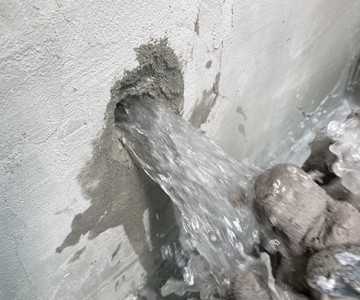
For sealing holes after dismantling tie screws, anchor rods, studs and other auxiliary elements that are used in the construction of reinforced concrete structures, it is recommended to use a high-strength non-shrink elastic repair mixture Teknorep 300 EX.

Read article
What is a hydro seal and how does it work

Hydro seal is a special cement-based quick-setting repair mixture, which includes active chemical additives, thanks to which active water leaks in concrete are stopped instantly.

Read article
How to plug holes in a concrete wall

With the help of Teknorep 300 EX material, it is possible to eliminate any defect with a size from 10 to 40 mm, if the hole is larger than 40 mm, it is recommended to repair in several layers.

Read article