Tenalux 111M MS polymer-based construction joint sealant (class 20HM)
Tenalux 111M is a ready-to-use MS Polymer-based sealant for filling joints and cracks in vertical and inclined building structures.
366 uah

Tenalux 111M is a ready-to-use MS Polymer-based sealant for filling joints and cracks in vertical and inclined building structures.
Can be used for sealing joints in horizontal structures in the absence of direct mechanical load. Easily applied manually by spraying using special guns. Cures due to chemical reaction with air moisture. The sealant has excellent adhesion to most building materials, as well as good strength and deformation properties after hardening. Can be used in residential premises.
Advantages
Areas of application
Packaging
Color: white
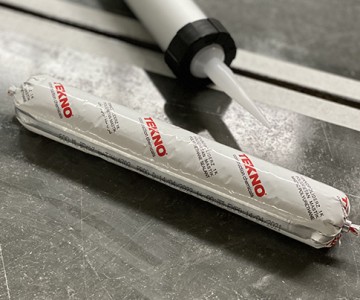
Packaging: sausage 600 ml, cartridge 290 ml.
Technical specifications
Base - MS Polymer
Consistency - Thixotropic paste
Surface film formation (23°C / 50% relative humidity) * - ~ 25 min
Curing speed (23 ° C / 50% relative humidity) * - 2 mm / 24 hours
Shore A hardness ** ≥ 25
Density ** - 1.60 g/ml
Elastic recovery (ISO 7389) ** - > 60 %
Maximum permissible distortion - ± 20%
Max. tension (ISO 37) ** - 1.70 N/mm2
Modulus of elasticity at 100% elongation (ISO 37) ** - 0.40 N/mm2
Elongation at break (ISO 37) ** - 400%
Temperature resistance ** - from - 50°C to + 70°C
Application temperature - +1°C to +50°C
Expiration date
18 months in closed packaging in a cool and dry place at a temperature of +5°C to +30°C.
Seam sizes
- Permissible width for seams: 5 - 30 mm.
- Permissible depth for seams: 10 - 50 mm.
Recommended sealing work: joint width = 2 x joint depth.
Safety recommendations
Follow normal occupational hygiene practices. For further information, see label and material safety data sheet.
Installation of an expansion joint - application of sealant
To prevent the formation of a third plane of contact between the sealant and the structural elements of the joint, it is always necessary to use anti-adhesive compounds or sealing gaskets, such as, for example, a polyethylene foam strap. To limit the depth of the sealant layer, achieve the recommended ratio of width and depth of the sealant, as well as reduce material consumption, it is recommended to select the size of the sealing gasket taking into account the actual width of the joint. In addition, the use of cellular sealing materials reduces heat loss and improves sound insulation performance. It is necessary to follow the recommendations for the optimal width and depth of the joint for this sealant. Applying a sealant with a layer thickness less than the minimum recommended leads to a decrease in the durability of the joint sealing. Exceeding the maximum recommended thickness of the sealant layer causes high internal stresses, which contribute to the appearance of cracks. Narrow joints must be enlarged using special tools to achieve the recommended width and depth. Treat joints that are too wide, as well as joints with a porous, weak surface, with appropriate repair compounds. Before applying the sealant, be sure to study the relevant safety data sheet and make sure that all manufacturer's instructions have been followed. Make sure that the ambient temperature at the place of application of the sealant is within the permissible temperature range of application. The sealant may only be applied to joints that meet the recommended parameters and have been prepared in accordance with the above instructions. Before use, it is recommended to keep the package with the sealant in a warm room at a temperature corresponding to the temperature range of application for at least 24 hours. The sealant is applied to the joint by squeezing it out using an appropriate syringe (gun). Insert the tube with the sealant into the syringe cylinder, cut off the tip of the tube from the tip (nozzle) side and close the cylinder. Select and install the tip that matches the size of the joint. When applying the sealant, the tip of the syringe is inserted into the seam to be sealed at an angle of 45°. Smoothly and evenly squeeze the sealant into the seam, avoiding the formation of cavities and air bubbles, breaks and overflows. At low temperatures, the sealant may have increased viscosity. Immediately after filling the seam, it is necessary to level and compact the applied sealant, as well as give it the desired shape with a suitable tool (spatula) of the appropriate size and configuration. The tool is moistened in a soap solution to prevent the sealant from sticking. Direct application of a soap solution to freshly applied sealant is not allowed. The tools are cleaned immediately after completion of work with solvents approved for use (it is recommended to use acetone or a mixture of acetone with isopropanol). Excess hardened mastic is removed mechanically. Freshly applied sealant must be protected from rain for a period of time exceeding the time it takes for the surface film to form.It is possible to use polyethylene film, tape or other material, but care should be taken to prevent the protective material from sticking to the sealant placed in the seam, and to prevent damage to the adjacent decorative coating.
Surface preparation
The surface in contact with the sealant must be solid, clean and dry. The joint surface must be cleaned of all contaminants that reduce the adhesive strength of the sealant to the surface - dust, cement film, cement mortar residues, residues of previously applied sealing material, etc. The surfaces are cleaned with metal brushes manually or with a power tool, then blown with compressed air. Places contaminated with oil or grease must be degreased with appropriate solvents in accordance with local regulations. Fresh concrete bases must be aged for at least 28 days to reduce humidity to an acceptable level. To check the quality of the joint, we recommend preparing a test joint on the construction site. If, despite following the recommendations for surface preparation, the adhesion of the sealant to the surface is unsatisfactory, special surface preparation methods must be used. In this case, contact the manufacturer's representative.