One-component sealant for building structures based on MS Polymer Tenalux 131M
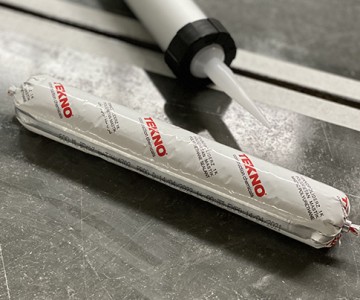
Ready-to-use, one-component sealant based on MS-Polymer for sealing joints in horizontal and vertical structures with direct mechanical load. Easy to apply manually by spraying using special guns. Cures due to a chemical reaction with air moisture. The sealant has excellent adhesion to most building materials, as well as good strength and deformation properties after hardening. Suitable for a variety of sealing and bonding tasks. Can be used outside and inside buildings, including residential premises.
372 uah

Description
Ready-to-use, one-component sealant based on MS-Polymer for sealing joints in horizontal and vertical structures with direct mechanical load. Easy to apply manually by spraying using special guns. Cures due to a chemical reaction with air moisture. The sealant has excellent adhesion to most building materials, as well as good strength and deformation properties after hardening. Suitable for a variety of sealing and bonding tasks. Can be used outside and inside buildings, including residential premises.
Areas of application
• Sealing of industrial floor joints, wall and staircase joints
• Sealing of joints and cracks in vertical and inclined building structures
• Connecting joints between equipment and the floor, pipe and communication entries, ventilation and air conditioning systems
• Adjoining facade and roof structures
• Sealing of expansion joints with a maximum deformation of ± 20%
• Various tasks for bonding building structures, including decoration
Advantages
• Can be applied in a wide temperature range
• Excellent thixotropy, does not flow in vertical joints
• Excellent adhesion to the surfaces of most building materials (concrete, metals, most polymer coatings, plastics, wood materials, PVC, glass and others) without the use of a primer
• Excellent resistance to climatic factors, especially in humid and hot conditions
• Resistant to ultraviolet radiation
• Maintains elasticity in a wide temperature range
• Safe to use – does not contain isocyanates, silicones and solvents
• Odorless
• Virtually does not shrink
Technical characteristics
General data
Appearance: Color: white RAL9003, black RAL9011, gray RAL7040, brown RAL8024, beige RAL1001. Other colors of the RAL palette - on request.
Type of polymer - one-component MS Polymer, cold hardening under the influence of air moisture.
Packaging - 600 ml.
Warranty shelf life - For tubes and cartridges: 18 months in unopened, intact factory packaging, in dry warehouses at a temperature not exceeding + 30°C.
Sealing properties
Unless otherwise stated, the characteristics are given for standard conditions: at a temperature of +(23±2)°C and a relative humidity of (50±5) %
Surface film formation (TTM 013) - from 20 to 60 minutes
Curing rate (TTM 010) - from 2 to 3 mm / day
Shrinkage (ISO 10563) - ≤3 %
Density (before curing) (ISO 1183-1) - ≈1.6 kg / liter
Resistance to yield (ISO 7390) - ≤3 mm
Elasticity (ISO 7389) - ≥60%
Adhesion characteristics at tension (ISO 8339):
• conditional strength - ≥0.5 MPa
• elongation - ≥120 %
• modulus of elasticity at 100% elongation - ≥0.5 MPa
Cohesion characteristics during tension (GOST ISO 37):
• conditional tensile strength - ≥1.2 MPa
• relative elongation - ≥350 %
Shore A hardness (ISO 868) - ≥35
Application temperature range - from - 15°C to +50°C
Operation temperature range - from - 50°C to +70°C
Storage temperature range - from - 20°C to +30°C
Seam characteristics (for horizontal structures)
Permissible deformation (from nominal size) - ±20%
Seam depth - from 5 to 15 mm
Seam width - from 5 to 30 mm
Seam width to depth ratio -2: 1 (width ≥5 mm), 1:1 (width ≤5 mm)
Installation of an expansion joint
To prevent the formation of a third plane of contact between the sealant and the structural elements of the joint, it is always necessary to use anti-adhesive compounds or sealing gaskets, such as, for example, a polyethylene foam strap. To limit the depth of the sealant layer, achieve the recommended ratio of width and depth of the sealant, as well as reduce material consumption, it is recommended to select the size of the sealing gasket taking into account the actual width of the joint. In addition, the use of cellular sealing materials reduces heat loss and improves sound insulation performance. It is necessary to follow the recommendations for the optimal width and depth of the joint for this sealant. Applying a sealant with a layer thickness less than the minimum recommended leads to a decrease in the durability of the joint sealing. Exceeding the maximum recommended thickness of the sealant layer causes high internal stresses that contribute to the appearance of cracks. Narrow joints must be enlarged using special tools to achieve the recommended width and depth. Too wide joints, as well as joints with a porous, weak surface, should be treated with appropriate repair compounds. Joints less than 5 mm are not subject to deformation and the sealant acts as an elastic seal in the joints of structures. In the case of use for bonding purposes, the minimum thickness is 2 mm.
Surface preparation
The surface in contact with the sealant must be strong, clean and dry. The surface of the joint must be cleaned of all contaminants that reduce the adhesive strength of the sealant to the surface - dust, cement film, cement mortar residues, residues of previously applied
| Manufacturer | Tenax |
| Country of manufacture | Latvia |
| Material | MS polymer |
| Use type | For outdoor work |
| Number of components | One-component |
| Minimum operating temperature | -50℃ |
| Maximum operating temperature | +70 ℃ |
| For coloring | Yes |
| Volume | 60 ml |