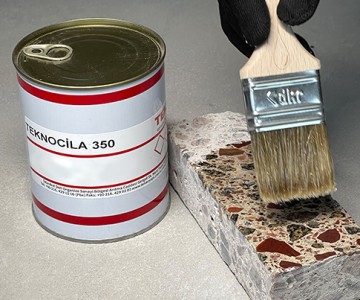
Properties of acrylic varnish for concrete and selection rules
There are a sufficient number of varieties of varnishes for concrete, among which acrylic is considered a very popular and high-quality material. In this article we will analyze several examples of acrylic lacquers and the scope of their use.
 What is acrylic varnish for?
Acrylic varnish is used to protect mineral surfaces from moisture, chemicals, UV rays, precipitation, to increase the service life of surfaces, to create a beautiful decorative finish of vertical and horizontal surfaces. Acrylic varnish creates a strong transparent glossy or matte (semi-matte) surface.
How to work with acrylic varnish?
It is quite simple to work with acrylic varnish, since it is ready for use. The main thing is to apply the finishing material on a strong, smooth and clean concrete base. To prepare the surface for applying varnish, you can use one of several methods: steam cleaning, high-pressure water jet or sand.
The material is applied only at a plus temperature of 5 °C.
What is the consumption of acrylic varnish for concrete?

Depending on the method of application, the consumption of varnish per square meter may differ, for example, when applying Teknocila 350 acrylic varnish with a roller or brush, the consumption will be approximately 0.100-0.200 l/m2, and a little more with a spray gun – about 0.150-0.250 l/m2. After the varnish dries, the thickness of the dry film will be about 135 microns.
What kind of varnish should I use for concrete?
The varnish should be selected depending on the object whose concrete base needs to be reinforced (for example, whether the surface will come into contact with moisture or chemicals), on the intensity of concrete operation, as well as on the desire to get a matte or glossy surface. Let 's look at the examples:
 1. What kind of varnish to cover concrete in an industrial room (factory, factory, workshop)?
Many factories and plants use many types of chemicals, to the effects of which concrete is absolutely not resistant. Therefore, you need to choose a super-strong varnish, such as Teknocila 350. It increases the wear resistance and water resistance of the surface, makes the surface resistant to chemicals and chlorine, as well as the material is quick-drying and gives the surface a beautiful glossy appearance.
For more reliable surface hardening, it is recommended to apply corundum or quartz topping to freshly laid concrete, for example, Teknoser 100 or Teknoser 300, before using the varnish. Thus, with the use of both topping and varnish, the strength of the concrete base will be 2-3 times higher. You can find the types of toppings in the article "Topping for concrete floors: what it is, how and where it is used."

2. Which varnish should be used to protect decorative coatings with a matte effect?
Gloss is not appropriate on every surface. Therefore, the manufacturer Tekno has created a special varnish with which you can create a beautiful matte or semi-matte decorative coating. A good high-performance acrylic varnish is considered to be Teknocila 400 water-based. The material strengthens the surface, protects against destruction under the influence of moisture, alkalis, and also protects the concrete base from color changes as a result of precipitation during external use. After application, a translucent film is formed, which gains full strength characteristics after 7 days.
It is better to trust professionals to choose the right varnish for concrete, so for advice, call 067 486 42 41.